What Is the Best Way to Start Forex Trading as a Beginner
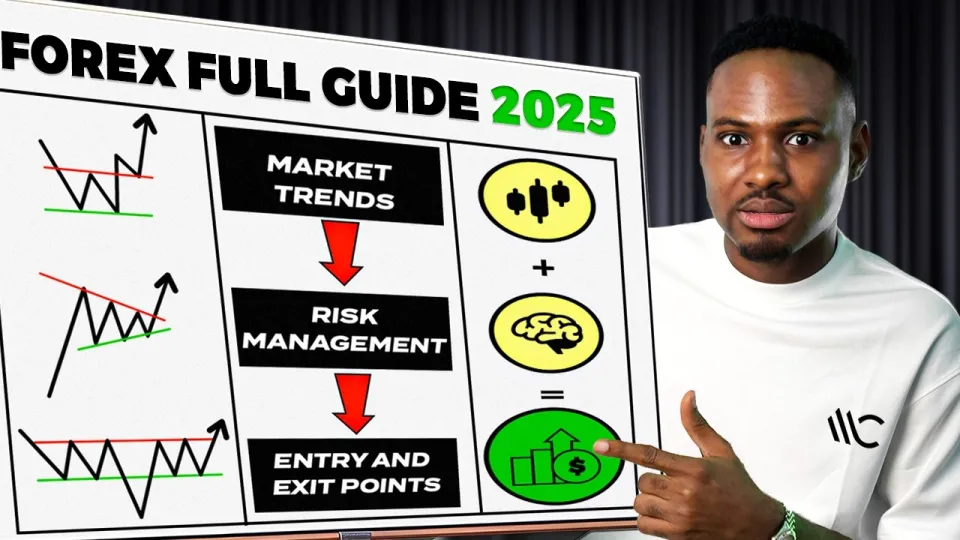
Video: How To Start Forex Trading For Beginners’ 2025 (Full Course)
Want articles like this for your own video to promote it on YouTube and Google? Order them through the Telegram bot @sat_sit_bot. It writes articles around your video, embeds the video and publishes them on popular niche websites (no ads). Your first 50 articles are free.
· based on the channel Jeffrey Benson Forex
Forex trading is the buying and selling of currency pairs on a decentralized over-the-counter market that runs 24 hours a day, five days a week. The most reliable way to start is to learn the mechanics first, open a demo account, and only then fund a live account with money you can afford to lose. A structured beginner path — the one laid out in the full course from Jeffrey Benson Forex and its student program at Fire Pips FX — covers market structure, tools, a basic strategy and risk control in that order.
What forex trading actually is and how the market works
Forex is the exchange of one currency for another, quoted in pairs such as EUR/USD, where the first currency is the base and the second is the quote. When EUR/USD reads 1.0850, one euro buys 1.0850 US dollars, and a move to 1.0900 means the euro strengthened against the dollar. There is no central exchange: banks, brokers, funds and retail traders deal through a network of liquidity providers, which is why prices differ slightly between brokers and why the market never closes on weekdays.
Three mechanics matter for a newcomer:
- Lots and pip value. Positions are sized in lots — a standard lot is 100,000 units of the base currency, a mini lot 10,000 and a micro lot 1,000. One pip on a standard lot of EUR/USD is roughly $10, on a mini lot about $1 and on a micro lot about $0.10.
- Leverage and margin. Brokers let you control a large position with a small deposit. At 1:100 leverage, $1,000 of margin controls $100,000 of currency, which magnifies both gains and losses.
- Spreads and costs. The spread is the gap between bid and ask; it is the broker's main retail cost, alongside swap fees on positions held overnight.
The four sessions that set the trading day
The forex day is divided into sessions tied to financial centres, and each has its own character. Sydney opens the week, Tokyo follows, then London, then New York. Liquidity and volatility peak when London and New York overlap, roughly the middle of the European afternoon, which is why many beginners are told to trade that window and avoid the quiet hours around the Asian lunch break. Writing the session times into a notebook — a habit several viewers of the course recommend — makes the schedule stick far better than watching passively.
Tools and setup you need before the first trade
A working beginner setup is small and inexpensive: a regulated broker account, a trading platform, a charting routine and a risk plan. The course recommends a specific broker partner and MetaTrader 5 (MT5) as the platform, with a short guide on linking the two. Whatever broker you choose, verify that it is licensed by a recognised regulator, check the spread on major pairs, and confirm that withdrawals are processed without friction before depositing anything.
A practical checklist:
- Platform: MT5 or an equivalent with demo mode, pending orders, stop-loss and take-profit fields.
- Charts: at minimum a candlestick chart on the 1-hour and 4-hour timeframes, with support and resistance marked.
- Economic calendar: to avoid opening trades minutes before high-impact data such as central bank decisions or US payrolls.
- Trading journal: entry, exit, reason for the trade and result, reviewed weekly.
- Risk plan: maximum percentage per trade and maximum daily loss, written down before the first order.
A basic strategy foundation for beginners
A beginner strategy does not need to be complex; it needs rules that can be repeated and tested. The core idea is to trade with the direction of the higher timeframe, enter on a pullback to a level that has already been respected, and define the exit before the entry. Support and resistance, trend direction and a trigger candle are enough structure for a first system.
A simple framework:
- Mark the day's high, low and obvious swing levels on the 4-hour chart.
- Decide the bias: higher highs and higher lows suggest buying dips, lower highs and lower lows suggest selling rallies.
- Wait for price to return to a marked level rather than chasing a move that has already run.
- Place the stop-loss beyond the level that would invalidate the idea, and set the target at least as far away as the stop.
- Record the outcome and repeat the same rules for at least 20 trades before changing anything.
Placing a first trade and sizing it correctly
Placing a trade means choosing the pair, direction, lot size, stop-loss and take-profit, then confirming the order. Position size should be calculated from the risk, not guessed: if the account holds $1,000 and the rule is 1% risk, the maximum loss on the trade is $10, and the lot size is set so that the distance to the stop-loss equals that amount. On a micro lot of EUR/USD, a 10-pip stop fits a $10 risk; a 50-pip stop would require a much smaller position.
Beginners should run this exact sequence on a demo account until it becomes routine. The purpose of the demo phase is not to prove you can make money but to prove you can follow your own rules when a trade goes against you.
Common beginner mistakes and the questions they raise
Most early losses come from process failures rather than bad analysis. Viewers of the course repeatedly describe finally understanding risk management only after months of searching, and others admit they watched tutorials for years without writing anything down. The recurring mistakes are consistent:
- Overleveraging. Opening a position far larger than the risk plan allows, so a normal pullback becomes a wipeout.
- No stop-loss. Holding a losing trade in the hope of a reversal, which turns a small loss into an account-threatening one.
- Revenge trading. Immediately re-entering after a loss to win the money back.
- Strategy hopping. Changing systems every few days, so no method is ever tested long enough to be judged.
- Skipping the journal. Without records there is no way to tell whether the edge is real or the result of luck.
A separate question beginners ask is whether they can simply copy someone else's trades. Copying signals is possible and some educators offer a free daily signal alongside paid groups, but it teaches little about why a trade was taken and leaves the follower unable to manage the position if the signal provider goes quiet. Copy trading is a shortcut to exposure, not a substitute for understanding risk.
Useful links
- Student plans and course access: https://firepipsfx.com/plans
- Free daily signal channel: https://t.me/firepipsignals
- Broker registration used in the course: https://my.assexmarkets.com/auth/register?partner_code=1699134
- Premium signal group access: https://t.me/jeffreybenzhelpbot
Bottom line
Starting in forex is a sequence, not a single decision: understand the pair mechanics, learn the sessions, set up a regulated broker and MT5, test a simple rule-based strategy on demo, and size every position from a fixed risk percentage. The full course from Jeffrey Benson Forex is a useful spine for that sequence because it moves from definitions to tools to a first trade to the mistakes that cost beginners money, rather than jumping straight to signals. Anyone serious about learning should treat the free material as a foundation and the paid student program at Fire Pips FX as the next step once the basics are genuinely understood.
Key takeaways
- Forex is a decentralized over-the-counter market where currencies trade in pairs 24 hours a day, five days a week.
- Beginners need three things before risking money: a regulated broker, a trading platform such as MT5, and a written risk plan.
- The four sessions — Sydney, Tokyo, London and New York — drive liquidity and volatility, with the London–New York overlap the busiest window.
- A common beginner rule is risking no more than 1–2% of account equity on a single trade.
- Structured education plus a demo account beats unguided trial and error, which is where most new traders lose their first deposit.
Questions & answers
How much money do I need to start forex trading?
You can open a live account with a few hundred dollars, but the amount matters less than the risk rule attached to it. With a $500 account and 1% risk, the maximum loss per trade is $5, which limits you to micro lots. Many beginners start on demo and fund live only when they can follow their plan consistently.
Is forex trading suitable for complete beginners?
It is accessible but not easy: leverage magnifies mistakes and most new traders lose their first deposit. Beginners who treat it as a skill built over months, with a demo phase, a journal and strict risk limits, have a far better chance than those chasing fast profits.
Can I just copy another trader's signals instead of learning?
Copying signals gives exposure without education, and you remain dependent on the provider's reliability and risk choices. It can be a supplement once you understand position sizing, but it does not replace knowing why a trade is taken or when to exit.
Which timeframe should a beginner trade?
Higher timeframes such as the 4-hour and 1-hour charts are calmer and produce fewer false signals than 1-minute or 5-minute charts. A common approach is to set direction on the 4-hour, then look for an entry on the 1-hour during the London–New York overlap.
Source: How To Start Forex Trading For Beginners’ 2025 (Full Course) · Markdown version